The Parenting Science News Feed

The Parenting Science news feed alerts you to updates on the Parenting Science website and to new blog posts or articles written by Gwen Dewar about parenting and child development topics.

If you have a social media account, you can follow this site by clicking on one of the Facebook, Twitter, Pinterest, or RSS buttons.


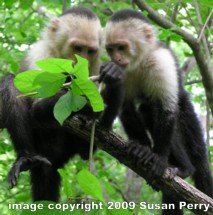
Growing up, capuchin style: What can the capuchin monkey teach us about kids?

two capuchin monkeys examining a stem

Share Facebook Twitter Pinterest Linkedin The capuchin monkey, indigenous to Central and South America, is a rather distant relation of humankind. We are Old World primates — more closely related to chimpanzees, orangutans, and even baboons. Nevertheless, we have much to learn from capuchins. They are the largest-brained, smartest monkeys in the New World. And … Continue reading

The physiological causes of colic: How ailments and neurological differences can sometimes explain excessive, inconsolable crying

screaming infant

Share Facebook Twitter Pinterest Linkedin Colicky infants cry excessively and inconsolably. Why? There are many possible answers. Long ago, people assumed that colic was caused by abdominal pain. But the link was unproven, so many researchers have adopted definitions of colic that make no reference to causation. In fact, some have argued that colic isn’t … Continue reading

Educational video games

happy, primary school children in classroom - girl on laptop with boy watching

Someday, educational video games may revolutionize the way we teach our kids. Are there any good games available now?

Prebiotics: How to feed your family’s friendly gut flora

Share Facebook Twitter Pinterest Linkedin© 2009 – 2012 Gwen Dewar, Ph.D., all rights reserved Like probiotics, prebiotics are a popular new food additive. Should your family be consuming them? Experiments suggest that prebiotic supplements are safe. They are probably healthful, too. Here is an overview of the subject: What prebiotics are, where you can find … Continue reading

Preschool science activities: How to nurture your child’s interest in the natural world

Share Facebook Twitter Pinterest Linkedin© 2008 – 2012 Gwen Dewar, Ph.D., all rights reserved Can we design better preschool science activities? Activities that stimulate curiosity, teach science concepts, and avoid overwhelming or boring children with lessons that are developmentally inappropriate? In the article below, I review the advice of educational and cognitive psychologists about preschool … Continue reading

Teaching critical thinking: An evidence-based guide

Share Facebook Twitter Pinterest Linkedin© 2009-2012 Gwen Dewar, Ph.D., all rights reserved Teaching critical thinking? You might wonder if kids will work it out for themselves. After all, lots of smart people have managed to think logically without formal instruction in logic. Moreover, studies show that kids become better learners when they are forced to … Continue reading

Math before words: What babies know about numbers

Share Facebook Twitter Pinterest Linkedin© 2008 – 2012 Gwen Dewar, all rights reserved What do babies know about numbers? Back in the 20th century, people assumed that infants lacked “number sense.” But today’s cognitive scientists have overturned the old ideas. Experimental research reveals a fascinating new world of baby cognition, one in which babies can … Continue reading

Probiotics for kids: A parent’s evidence-based guide

Share Facebook Twitter Pinterest Linkedin© 2009-2012 Gwen Dewar, Ph.D., all rights reserved Some medical researchers recommend probiotics for kids with acute diarrhea and for the prevention of antibiotic-associated diarrhea (Floch et al 2008). They note that probiotics may be helpful for certain other ailments, too. But before you go to the pharmacy or market, it’s … Continue reading

Social cognition and people skills: A parent’s evidence-based guide

Share Facebook Twitter Pinterest Linkedin© 2006-2011 Gwen Dewar, Ph.D., all rights reserved “Social cognition” refers to the ways we perceive, think, and learn about people. Looking for information about how these abilities develop? In these pages, you’ll find articles about the social abilities of newborns, what babies know about social dominance, and the ways that … Continue reading

Preschool science experiment: Making mud bricks

Share Facebook Twitter Pinterest LinkedinThis preschool science experiment is designed for kids who have already had experience playing with mud — both mixing mud and drying out mud. For best results, try this experiment after your child has explored the properties of dirt and mud. Materials Multiple dirt samples (sand, topsoil, dirt-and-gravel, etc.) Dried leaves … Continue reading

The owner of this website has made a commitment to accessibility and inclusion, please report any problems that you encounter using the contact form on this website. This site uses the WP ADA Compliance Check plugin to enhance accessibility.