Punitive environments encourage children to tell lies

It’s not unusual for kids to tell lies, but their readiness to deceive depends on how adults treat them. What can we do to foster honesty?
It’s not unusual for kids to tell lies, but their readiness to deceive depends on how adults treat them. What can we do to foster honesty?

© 2021 Gwen Dewar, Ph.D., all rights reserved As disciplinary tactics go, spanking is ineffective, and it may be harmful, too. A new study suggests that spanking alters the brain, making kids more reactive to potential threats, and more at risk for developing behavior problems. Over the years, I’ve followed the research on spanking, and … Continue reading

Families are better off when teenagers communicate openly with their parents. But how do we inspire better communication? An experimental study shows the way: We need to provide kids with crucial signals of active, supportive listening. Not only does it make kids feel better. It also encourages them to confide in us.

Studies suggest that many bullies are popular, confident, and socially-savvy. What’s missing? Empathy, and a sense of social responsibility.

© 2021 Gwen Dewar, Ph.D., all rights reserved The difficulty of identifying ADHD in children Diagnosing ADHD, or attention deficit hyperactivity disorder, is intrinsically problematic. The symptoms—distractibility, impulsivity, and hyperactivity—are consistent with the normal behavior of young children. So when young children are diagnosed, the implication is that they are more distractible, impulsive, or hyperactive than … Continue reading

Unconscious race biases can make us perceive anger where none exists. How many “behavior problems” in children are caused by adults getting it wrong?
Bullying in children is linked with long-term problems, and it isn’t only the victims who are affected. Kids who bully are more likely to develop symptoms of “antisocial personality disorder” — a condition colloquially known as “sociopathy” or “psychopathy.” You’ve probably heard that bullying can cause lasting harm. For example, children who get bullied at … Continue reading

Psychologists call them “externalizing” behaviors — acts of disruption, aggression, defiance, or anti-social intent. Just about every parent has to cope with them at some point, particularly during the toddler years. Young children are still developing the ability to regulate their emotions and impulses; they need to learn what is expected of them. Research suggests … Continue reading

Correcting behavior? Studies suggest the best approach is positive and constructive. When kids make mistakes, we should ask them to think about solutions.

Spanking children doesn’t help them learn self-control or social skills, and studies consistently show that spanking increases a child’s risk of developing behavior problems. But how can we be sure that spanking is harmful, and what can parents do instead when their children misbehave?
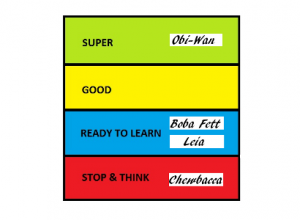
What’s wrong with classroom behavior charts? Shaming is stressful, and it can make kids behave worse, not better.
© 2008-2019 Gwen Dewar, all rights reserved Bullying in school is costly to everyone. Victims are traumatized. Bullies may become more anti-social over time. And bystanders are affected too. Living in a community that tolerates bullying is stressful, and it might make it harder for kids to learn. Researchers have found that kids earn higher … Continue reading