Nighttime fears are very common, and typically include the fear of being left alone in the dark, as well as fears of intruders, monsters, and other environmental threats. In this article, I review
- the evolutionary basis for children’s fears;
- why kids may be biologically unprepared to cope by themselves; and
- evidence-based strategies to help children overcome their fears and anxieties.
In addition, you will find links to related articles about improving disturbed sleep. For instance, if your child suffers from frightening dreams or nighttime screaming episodes, you might want to check out my article about nightmares and night terrors.
Taking in the big picture: Nighttime fears are more common than people realize
If you’re reading this because your child suffers from nocturnal fears, you’re fortunate in at least one respect: You know about it.
To see what I mean, consider a couple of studies that are frequently cited in the medical literature.
The first study, conducted in Netherlands, surveyed more than 175 children between the ages of 4 and 12. More than 73% of these kids said they were coping with fear at night. But when the researchers asked parents, only 34% believed their kids had nighttime fears (Muris et al 2001).
Similarly, researchers in Australia interviewed kids between the ages of 8 and 16, and found that a clear majority — 64% — were experiencing nighttime fears. Yet one third of these kids said they hadn’t told anyone about their fears — not even their parents (Gordon et al 2007).
So many kids struggle, even if their parents are unaware of the problem. And while these studies don’t tell us how prevalent nighttime fears are in other countries, it’s clearly a widespread phenomenon. Around the world — in places as different as Brazil, Israel, Hungary, South Korea, and the United States — parents are seeking help for frightened or anxious kids (Lewis et al 2021; Chou et al 2022).
Why is this the case? Why do so many children experience fear or anxiety at night?
Nighttime fears in evolutionary and cross-cultural perspective
There’s no doubt that disturbing or frightening media content can contribute to the development of nighttime anxiety. Stories about ghosts or monsters…scary movies or television shows…these can spark fear (Muris and Field 2010).
Moreover, kids can acquire fear via observational learning — internalizing the fear they’ve seen modeled by others. And children can be especially sensitive to comments they hear. Kids might stay up at night, worrying, because someone told them they will grow a tree in their belly if they swallow a seed. Or they might take a fanciful, manipulative warning to heart — truly believing the adult who tells them “Better stay in bed, or the bogey man will get you!”
So children can develop fears from (1) watching frightening media, (2) witnessing the fearfulness of other people, or (3) drawing false, dire conclusions from the things people say. But that’s not all. It’s also important to understand that the brain is more susceptible to fearful, anxious emotions at night.
For example, there’s the human, physiological reaction to darkness. When we’re plunged into darkness, we become jumpy — more reactive — to sudden movements or sounds (Grillon et al 1997; McGlashan et al 2021).
And everyone tends overreact to emotional stimuli after a long day. Experiments suggest that the amygdala — a brain region that processes emotional events — becomes overactive when you are tired (Yoo et al 2007; Maski and Kothar 2013). So negative emotions may come naturally to us at night.
What about our sleep arrangements — where we sleep, and with whom?
Does it make a difference if a child sleeps alone, or with others? In many Western countries, solitary sleep for children is considered desirable. People expect kids to spend the night by themselves, sometimes behind a closed door.
This could explain why some parents don’t realize that their kids are experiencing fear. They aren’t there to observe it.
And — just as importantly — it’s possible that solitary sleep could contribute to nighttime axiety. After all, it’s not hard to imagine how sleeping alone could trigger separation anxiety — a panic response arising from a primitive part of brain that also processes information about physical pain (Panskepp 2000). And it makes sense that kids would find nocturnal separation to be especially distressing.
For the vast majority of human history, cosleeping was the norm for people of all ages. By sharing a sleep space, folks could stay warm, and find safety in numbers against the threat of predation and other environmental threats. Leaving young children alone at night? That would have been especially risky — a form of child neglect. Any kids who found themselves alone at night would have had real reason for concern…if not alarm.
So children who actively resisted being left alone would have had a survival advantage. Separation anxiety would have inspired kids to stay close and safe. And to the degree that a child’s genes contributed to this happy outcome, those genes would have been favored by natural selection.
Of course, in many modern, affluent countries, kids can sleep alone without jeopardizing their physical safety. Yet the tendency to be fearful remains.
By evolutionary design, the brain monitors the environment for potential threats. It can acquire new fears very rapidly — often after a single, negative experience. And young children are wired to pay attention to social cues, and maintain access to caregivers. If they perceive a lack of access to caregiving or support, this in itself can be stressful and frightening.
Does this mean kids will experience less fear if they sleep with family members?

Maybe. In a study tracking over 900 Quebecois children from the age of two, Valérie Simard and her colleagues found that toddlers who slept in their mothers’ beds were less likely to suffer from nightmares in later years (Simard et al 2008). And this could be construed as evidence that cosleeping is protective against certain types of fearful, nighttime experiences.
But of course we can’t prove causation on the basis of a single, correlational study. And we might also wonder if there’s a difference between cosleeping as a preventative measure, and cosleeping as a treatment.
It’s plausible that the ancestral pattern of cosleeping could help prevent certain types of nighttime fears from ever arising in the first place. Because they aren’t left alone in a dark room, children would have less reason to experience separation anxiety, and they might be less likely to fixate on other potential threats, like the sounds of a storm, or the shadowy appearance of a bedroom closet.
But what if parents start out with a commitment to solitary sleep — sending kids to their own rooms at bedtime — but change course when a child expresses fear? In societies where solitary sleep is considered the ideal, families often engage in what researchers call “reactive co-sleeping” — with caregivers accomodating a frightened child’s requests to crawl into bed (El Rafihi-Ferreira et al 2019).
Does this accomodation make a child feel less fearful in the moment? Usually, yes. But we don’t know if reactive cosleepers learn to overcome their nighttime fears in the longterm.
My suspicion is that cosleeping isn’t a remedy for pre-existing nighttime fears — not by itself. Whether your child sleeps alone or with family members, the important thing is to actively help your child “reprogram” his or her fearful responses. Why?
Why it’s important to address a child’s nighttime fears
First, it goes without saying, but I’ll say it anyway: We love our kids, and don’t want them to suffer. So we shouldn’t want to leave them stewing in a state of fear or anxiety.
But some parents might reasonably wonder if it’s kinder in the long run to let kids sort these things out for themselves. Won’t they be better off — stronger, braver — if we force them to face up to their fears on their own?
The answer to this is yes, we want our kids to learn how to overcome their fears. But children lack the psychological equipment to handle things on their own.
To see what I mean, consider what psychological tools are required for a child to overcome his or her nighttime fears. To be successful, kids need:
- a well-developed sense of time (“When will I see Mommy again?”);
- the ability to control emotional impulses;
- the ability to distinguish appearances from reality; and
- the ability to reason consciously, and trust rational conclusions over misleading sensory information (“That shadowy bump on the floor might look like a monster, but I know it’s really a pile of clothes”).
Most kids don’t develop these capacities until they are 5-6 years old—not coincidentally the age when the brain’s frontal lobes start to mature (Eliot 2000). The frontal lobes permit us to reason, problem-solve, and plan ahead. They also help us decide what to do with the raw emotions we feel.
So the implications are clear. When frightened toddlers and preschoolers are left to fend for themselves, they don’t know how to calm themselves down. And even after kids develop the ability to reason about their emotions, they can’t be expected to invent their own effective fear-management therapies. Like many adults struggling with chronic anxiety or fear, they need guidance!
Moreover, some children are intrinsically more timid or anxious than others. Exposed to the same situations as their more laid-back peers, these anxiety-prone individuals are more physiologically reactive. They are more easily triggered, and calm down with greater difficulty (Fox et al 2005; Eliot 2000).
Does this mean they are doomed to be frightened of everything? No. They can learn to cope, learn to be brave, learn to self-soothe. But to get there, they need our help — smart, sensitive guidance that helps them take small, manageable steps toward mastering their fears.
And what’s the payoff for all of this? It extends beyond the immediate benefit of reducing a child’s negative emotions at night.
For one thing, there is the very serious benefit of better sleep: Resolving a child’s nighttime fears can reduce a child’s sleep problems, improving the well-being of the entire family.
Indeed, there is little point in implementing “sleep training” if you aren’t going to first address your child’s nighttime fears. It’s just basic biology. Human beings don’t fall asleep when they are anxious or frightened.
For another thing, addressing nighttime fears can make us aware of bigger problems that need fixing.
Remember that study of children in Australia? Researchers had selected participants from the general population — not from the rosters of psychiatric patients. Yet when they examined the kids who reported nighttime fears, they discovered that 10% of these children met the criteria for a full-blown anxiety disorder (Gordon et al 2007).
So if we take nighttime fears seriously, it may help us identify which kids need professional interventions to get better. And that may help children avoid emotional problems later in life.
Okay. Enough of this. What specific strategies can we use to help kids feel calm, secure, and in control? Here are some evidence-based tips.
Helping children cope with nighttime fears: A checklist
1. Always question parenting advice that encourages parents to leave distressed children alone at night.
As noted above, kids lack the coping tools to work things out by themselves. And even advocates of “cry-it-out” strategies of sleep training warn that such approaches are inappropriate for young babies and children who are especially fearful or anxious (France and Blampied 1999; Owens et al 1999).
2. When your child is in the grip of a fear episode, use the power of affectionate touch.
Affectionate touch counters the effects of stress. It also switches off separation anxiety (Panskepp 2006).
3. If your child is able to express his or her fears verbally, listen…and offer confident reassurance.
Studies confirm that kids may fear a variety of different things, and while the list includes imaginary creatures (like monsters and ghosts), it also includes many down-to-earth threats (like burglars, insects, environmental hazards, and the prospect of losing a parent). And of course kids may be afraid of the dark, or of sleeping alone.
Once you understand what’s bothering your child, you can take steps to reassure him or her. As I note elsewhere, the key message to get across is this:
- You are safe. I’m here for you.
- I am listening, and I won’t be dismissive, or make fun of you.
- I am relaxed, and certain that you can overcome this fear. It’s going to be okay.
- I can help you confirm that there aren’t any threats here.
4. Talk about the difference between fantasy and reality, and prove to them that there is no monster under the bed (or in the closet)!

This is where you make good on the message above. Does your child’s fears concern imaginery threats? That’s not unusual. In fact, kids who have trouble distinguishing fantasy and reality may be at higher risk for nighttime fears (Zisenwine et al 2012). So make it clear that imaginary threats aren’t real.
5. Is your child showing severe symptoms? Don’t just wing it. Seek professional help.
For some children, it goes beyond fearing the dark, or feeling anxious about separation. These kids experience intense distress, and their symptoms interfere with their ability to participte in everyday activities. And when this is the case, you’ll definitely want to consult with medical professionals or therapists. They may recommend cognitive behavioral therapy, as well as an approach called “exposure therapy.”
But for kids with less severe symptoms, it’s possible to make good progress at home — if you employ the right strategies. Read more about it in my Parenting Science article, “Afraid of the dark: A troubleshooting guide,” where I over the signs of this particular nighttime fear, and explain best practices for handling it.
6. Avoid frightening television, stories, and imagery — especially before bedtime.
This includes passive exposure, which occurs when your child is present while you watch potentially disturbing material on TV. One study reported that 5-6 year olds exposed to adult TV programs—including the evening news—slept less overall, and experienced more sleep disturbances (Paavonen et al 2006).
7. Offer your child the comfort of a soft toy animal or or doll.

It’s an age-old remedy, and experimental evidence confirms that it can really help.
For example, in one study, researchers randomly assigned fearful preschoolers to receive a toy “huggy puppy.” Some kids were told that the puppy was “a little sad and scared” and needed their snuggles to feel better. Other kids were told that the puppy would protect them during the night.
All of the kids were tracked over time, and their progress was compared with children in a control group. The results? Having a “huggy puppy” at night led to reductions in fear and other sleep problems — regardless of whether the toy was presented as a protector or as a creature needing protection (Kushnir and Sadeh 2012).
8. Try to be patient.
If your child’s nighttime fears are depriving you of sleep, it’s natural to feel resentment. But it’s important not to direct anger or irritation at your child. If your child feels rejected, this will only intensify his or her separation anxiety.
9. Respond promptly to nightmares.
Assure your child that the nightmare wasn’t real, and explain that everybody has nightmares sometimes. The more quickly you break the spell of a frightening dream, the more quickly your child can get back to sleep.
For more information about nightmares — and their dopplegangers (sleep terrors), see this Parenting Science guide.
10. Consider sources of daytime stress.
Kids who suffer from daytime anxieties—about school, separation from parents, or other concerns—are more likely to fear the dark and fear sleeping alone (Gregory and Eley 2005). You may be able to reduce your child’s nighttime fears by helping him or her cope with daytime stress.
11. Make sure you aren’t expecting your child to sleep when he or she isn’t drowsy.
Sometimes parents overestimate how much sleep their children need. Or they try to enforce a bedtime that’s too early. Their kids simply aren’t drowsy yet! As a result, they send their kids to bed long before kids can fall asleep. And kids left to stew in the dark have more time to dwell on nighttime fears (Ferber 1995).
So take note if there is a mismatch, and reschedule bedtime to better align with your child’s rhythms. What should you do if postponing bedtime leaves your child with too little time overall? In this case, you can use a technique called “bedtime fading” to gradually train your child’s brain to become sleepy at the desired time. Learn how by reading my guide to bedtime fading.
12. Provide your child with a night light.
As you and your child works through her nighttime fears, you can switch to progressively dimmer lights (Glaze 2004). But word to the wise: Find a nightlight that gives off dim light, and light with a soft, warm hue.
Studies indicate that both bright light and blue light inhibit the production of melatonin in the brain, and thus may prevent your child from feeling drowsy at bedtime. Read more about it in this Parenting Science article.
13. Be a model of calm, confident behavior
When your child comes to you in a fearful state, be warm, sensitive and responsive. Tell him you understand that he is scared, and that everybody gets scared sometimes. But don’t let sympathy turn into overprotectiveness.
As we’ve already noted, kids can pick up new fears by watching other people model them. And if we respond to their distress by becoming distressed ourselves, it can have a reinforcing effect: Kids will feel we’ve confirmed that their own fears are warranted.
14. Show your child how to relax
For instance, as you soothe a crying child, you can show her breathing exercises.
In a study aimed at reducing anxiety in young children scheduled for a medical procedure, researchers taught kids how to take slow, deep breaths by having them exhale into party blowers (Jay et al 1987). These breathing exercises appeared to reduce distress in 40% of the kids.
15. Counteract frightening thoughts with images of happiness, safety, humor, and bravery.
When your child is fearful, help him think of situations that make him feel happy and in control (Jay et al 1987). For instance, you might encourage him to imagine he is playing with a favorite pet. You might also have him practice telling themselves that he is brave. And teach him how to deliberately change the way he thinks about scary things. Is he troubled by thoughts of a scary monster? Ask him to re-imagine it as something goofy, silly, and non-threatening.
16. Teach coping skills through role-playing
Many kids overcome their fear of medical check-ups by playing “doctor” at home. You can apply this approach to nighttime fears as well (Jay et al 1987).
It’s useful if you have a helper to pitch in — then the two of you can act out the parts of the frightened child and helpful parent. The “parent” shows the “child” how to counter her nighttime fears, and the child tries each technique out. After this demonstration, have the child play the part of the comforting adult. You—or a favorite toy—can take the part of the fearful child.
17. During the daytime, create stories with your child in which the protagonist (your child’s favorite fictional character or hero) learns to overcome specific fears
This technique—called story desensitization—is designed to make children less fearful by having them confront their fears in small steps (King et al 2001).
Start by telling a story that lacks any frightening elements. Then introduce something that is just a little bit scary.
For instance, if your child is afraid of spiders, you might add a very small, non-threatening spider to the story (one that keeps its distance from the hero). The hero responds by successfully practicing the fear management techniques mentioned above.
If this story doesn’t distress your child, you can intensify the frightening element in the next story—perhaps by making the spider come closer. In this way, you may gradually desensitize your child’s fears.
18. Is your child neurodivergent? Or struggling with attention problems? Impulsivity? Or other cognitive issues? Seek specialized advice.
Research suggests that kids with problems at night often suffer from a variety of additional problems, including chronic anxiety, impulsivity, or abnormal attentional control (Kushnir et al 2014). In addition, children on the autism spectrum may experience “sleep anxiety” — a fear of falling asleep (Goldman et al 2009).
Will these kids benefit from the same strategies that therapists use on normally-developing children? Studies suggest that cognitive behavioral therapy is generally advantageous (Rosenau et al 2024; Lewis et al 2021), but some adjustments may be required (Paulus et al 2021). If nothing else, success requires more patience! A specialist can recommend a program of help tailored to the individualized needs of your child.
References
Adam EK, Hawkley LC, Kudielka BM, and Cacioppo JT. 2006. Day-to-day dynamics of experience–cortisol associations in a population-based sample of older adults. Proc Natl Acad Sci USA. 103(45):17058-63.
Chou WH, Chen HX, and Hsu CC. 2022. Research on Alleviating Children’s Nighttime Fear Using a Digital Game. Children (Basel). 9(3):405.
Coss R. 2021. Something Scary Is Out There: Remembrances of Where the Threat Was Located by Preschool Children and Adults with Nighttime Fear. Evolutionary Psychological Science 7: 239–253
Coss RG and Blozis SA. 2021. Something Scary is Out There II: the Interplay of Childhood Experiences, Relict Sexual Dinichism, and Cross-cultural Differences in Spatial Fears”. Evolutionary Psychological Science. 7 (4): 359–379.
El Rafihi-Ferreira R, Lewis KM, McFayden T, and Ollendick TH. 2019. Predictors of Nighttime Fears and Sleep Problems in Young Children. J Child Fam Stud 28: 941–949.
Eliot L. 2000. What’s going on in there? How the brain and mind develop during the first five years of life. New York: Bantam.
Ferber R. 1995. Sleeplessness in children. In R Ferber and M Kruger (eds), Principles and Practices of sleep medicine in children.
Fox NA, Henderson HA, Marshall PJ, Nichols KE, and Ghera MM. 2005. Behavioral inhibition: linking biology and behavior within a developmental framework. Annu Rev Psychol. 56:235-62
France KG and Blampied NM. 1999. Infant sleep disturbance: Description of a problem behaviour process. Sleep Medicine Reviews 3(4): 265-280.
Glaze DG. 2004. Childhood insomnia: why Chris can’t sleep. Pediatrics Clinics of North America 51: 33-50.
Goldman SE, Surdyka K, Cuevas R, Adkins K, Wang L, Malow BA. 2009. Defining the sleep phenotype in children with autism. Dev Neuropsychol. 34(5):560-73
Gordon J, King NJ, Gullone E, Muris P, and Ollendick TH. 2007. Treatment of children’s nighttime fears: the need for a modern randomised controlled trial. Clin Psychol Rev. 27(1):98-113.
Gordon J, King N, Gullone E, Muris P, and Ollendick TH. 2007. Nighttime fears of children and adolescents: frequency, content, severity, harm expectations, disclosure, and coping behaviours. Behav Res Ther. 45(10):2464-72.
Gregory AM and Eley TC. 2005. Sleep problems, anxiety, and cognitive style in school-aged children. Infant and Child Development 14: 435-444.
Grillon C, Pellowski M, Merikangas KR, and Davis M. 1997. Darkness facilitates the acoustic startle reflex in humans. Society of Biological Psychiatry, 42: 453–460.
Jay SM, Elliott, CH, Katz, ER, and Siegel, SE (1987). Cognitive-behavioral and pharmacologic interventions for childrens’ distress during painful medical procedures. J. Consult. Clin. Psychol. 55: 860-865.
King NJ, Heyne D, Gullone E, and Molloy GN. 2001. Usefulness of emotive imagery in the treatment of childhood phobias: clinical guidelines, case examples and issues. Counselling Psychology Quarterly 14: 95-101.
Kushnir J and Sadeh A. 2012. Assessment of brief interventions for nighttime fears in preschool children. Eur J Pediatr. 171(1):67-75.
Kushnir J, Gothelf D, Sadeh A. 2014. Nighttime fears of preschool children: A potential disposition marker for anxiety? Compr Psychiatry. 55(2):336-41.
Lewis KM, Rafihi-Ferreira RE, Freitag GF, Coffman M, and Ollendick TH. 2021. A 25-Year Review of Nighttime Fears in Children: Past, Present, and Future. Clin Child Fam Psychol Rev. 24(3):391-413.
Mahat G and Scoloveno M. 2003. Comparison of fears and coping strategies reported by Nepalese school-age children and their parents. J Pediatr Nurs. 18(5):305-13.
Maski KP and Kothare SV. 2013. Sleep deprivation and neurobehavioral functioning in children. Int J Psychophysiol. 89(2):259-64.
McGlashan EM, Poudel GR, Jamadar SD, Phillips AJK, Cain SW. 2021. Afraid of the dark: Light acutely suppresses activity in the human amygdala. PLoS One. 16(6):e0252350.
Muris P, Merckelbach H, Ollendick TH, King NJ, and Bogie N. 2001. Children’s nighttime fears: parent-child ratings of frequency, content, origins, coping behaviors and severity. Behav Res Ther. 39(1):13-28.
Muris P and Field AP. 2010. The role of verbal threat information in the development of childhood fear. “Beware the Jabberwock!”. Clin Child Fam Psychol Rev. 13(2):129-50.
Owens JL, France KG, and Wiggs L. 1999. Behavioural and cognitive-behavioural interventions for sleep disorders in infants and children: A review. Sleep Medicine Reviews 3(4): 281-302.
Paavonen EJ, Pennonen M, Roine M, Lahikainen AR (2006): TV viewing associated with sleep disturbances in 5-6 year old children. J Sleep Res 15: 154-161.
Panksepp J. 2001. Affective Neuroscience: The Foundations of Human and Animal Emotions. New York: Oxford University Press.
Paulus FW, Ohmann S, Möhler E, Plener P, Popow C. 2021. Emotional Dysregulation in Children and Adolescents With Psychiatric Disorders. A Narrative Review. Front Psychiatry.;12:628252.
Percy R, Creswell C, Garner MJ, O’Brien D, and Murray L. 2016. Parents’ Verbal Communication and Childhood Anxiety: A Systematic Review. Clinical Child and Family Psychology Review 19: 55-75.
Rosenau KA, Kim J, Cho AB, Seltzer M, Ugueto AM, Weisz JR, and Wood JJ. 2024. Meta-analysis of Psychotherapy for Autistic Youth. Child Psychiatry Hum Dev. 2024 Apr 5. doi: 10.1007/s10578-024-01686-2. Epub ahead of print. PMID: 38580853.
Simard V, Nielsen TA, Tremblay RE, Boivin M, and Montplaisir JY. 2008. Longitudinal study of bad dreams in preschool-aged children: prevalence, demographic correlates, risk and protective factors. Sleep 31(1):62-70.
Yoo SS, Gujar N, Hu P, Jolesz FA, Walker MP. 2007. The human emotional brain without sleep–a prefrontal amygdala disconnect. Curr Biol. 17(20):R877-8.
Zentall TR and Galef BG (eds). 1988. Social learning: Psychological and biological perspectives. Hillsdale, NJ. Lawrence Erlbaum Associates.
Zisenwine T, Kaplan M, Kushnir J, Sadeh A. 2012. Nighttime Fears and Fantasy-Reality Differentiation in Preschool Children. Child Psychiatry Hum Dev. 44(1):186-99.
Content last modified 5/2024. Portions of the text derive from earlier versions of this article, written by the same author.
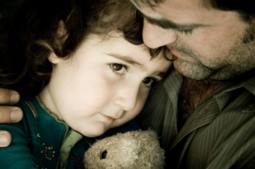
image of father comforting young daughter by copyright istock/Sheryl Griffin
image of mother lying awake in bed with sleeping toddler by Iammotos / shutterstock
image of mother and daughter hanging upside down, peering under the bed with flashlight by fizkes / shutterstock
image of little girl holding teddy bear while lying in bed and smiling up at parent by DONOT6 / istock