Preschool cognitive development: Are kids smarter than they seem?
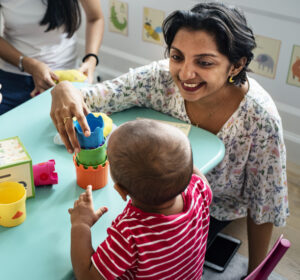
Kids make strange errors, but not because they’re clueless. Studies of cognitive development suggest we’re partly to blame. We’re testing them the wrong way.
The Parenting Science news feed alerts you to updates on the Parenting Science website and to new blog posts or articles written by Gwen Dewar about parenting and child development topics.
If you have a social media account, you can follow this site by clicking on one of the Facebook, Twitter, Pinterest, or RSS buttons.
Kids make strange errors, but not because they’re clueless. Studies of cognitive development suggest we’re partly to blame. We’re testing them the wrong way.
Share Facebook Twitter Pinterest Linkedin© 2008-2019 Gwen Dewar, all rights reserved Bullying in school is costly to everyone. Victims are traumatized. Bullies may become more anti-social over time. And bystanders are affected too. Living in a community that tolerates bullying is stressful, and it might make it harder for kids to learn. Researchers have found … Continue reading
Share Facebook Twitter Pinterest LinkedinOxytocin is often called the “hormone of attachment” because it seems to help individuals bond with other members of their in-group. A surge of oxytocin makes us feel more trusting and generous toward our social partners (e.g., Baumgartner et al 2008; Zak et al 2007). It encourages us to tend and … Continue reading
No, spanking babies is a bad idea. Our forager ancestors rejected it, and so should we. Here is why spanking is counterproductive – and damaging.
Share Facebook Twitter Pinterest LinkedinThese sources are cited in my article about preschool social skills. Bakermans-Kranenburg MJ, Van IJzendoorn MH, Pijlman FT, Mesman J, Juffer F. 2008. Experimental evidence for differential susceptibility: dopamine D4 receptor polymorphism (DRD4 VNTR) moderates intervention effects on toddlers’ externalizing behavior in a randomized controlled trial. Dev Psychol. 44(1):293-300. Bakermans-Kranenburg MJ, … Continue reading

Share Facebook Twitter Pinterest Linkedin© 2010-2019 Gwen Dewar, Ph.D., all rights reserved What do psychologists mean by the ” sexualization of girls? “ According to the American Psychological Association, sexualization occurs when “individuals are regarded as sex objects and evaluated in terms of their physical characteristics and sexiness.” That isn’t something that children should ever … Continue reading

Spatial intelligence is crucial for success in many fields, ranging from science and engineering to construction and graphic design. Can we improve spatial skills? Experiments say yes.

Share Facebook Twitter Pinterest Linkedin© 2008 – 2018 Gwen Dewar, all rights reserved Looking for evidence-based sleep tips? These articles review the latest relevant research in anthropology, brain science, sleep science, and pediatrics. They include discussions of baby sleep and the best-available evidence regarding child sleep requirements. In addition, there are articles about Children who … Continue reading

Mind-minded parenting assumes that even babies have independent thoughts and feelings. It’s an approach that helps kids build secure relationships, strong social skills, and self-control.
Share Facebook Twitter Pinterest LinkedinThese are the references cited in my article “Baby sleep patterns: A guide for the science-minded parent.” For related articles, see “Newborn sleep,”“Baby sleep requirements,” and “Infant sleep problems.” Akerstedt T, Billiard M, Bonnet M, Ficca G, Garma L, Mariotti M, Salzarulo P, Schulz H. 2002. Awakening from sleep. Sleep Med … Continue reading
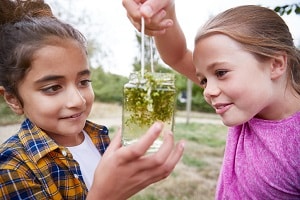
Outdoor learning benefits kids in many ways – reducing stress, lifting moods, & boosting concentration.
Share Facebook Twitter Pinterest Linkedin© 2008 – 2017 Gwen Dewar, Ph.D., all rights reserved Bully-victims: A special type? Some kids occupy the middle of the bullying food chain. They get bullied by dominant individuals, but they also perpetrate bulling themselves. Rejected, victimized, and aggressive, these “bully-victims” tend to have more psychological problems than either “pure bullies” … Continue reading